

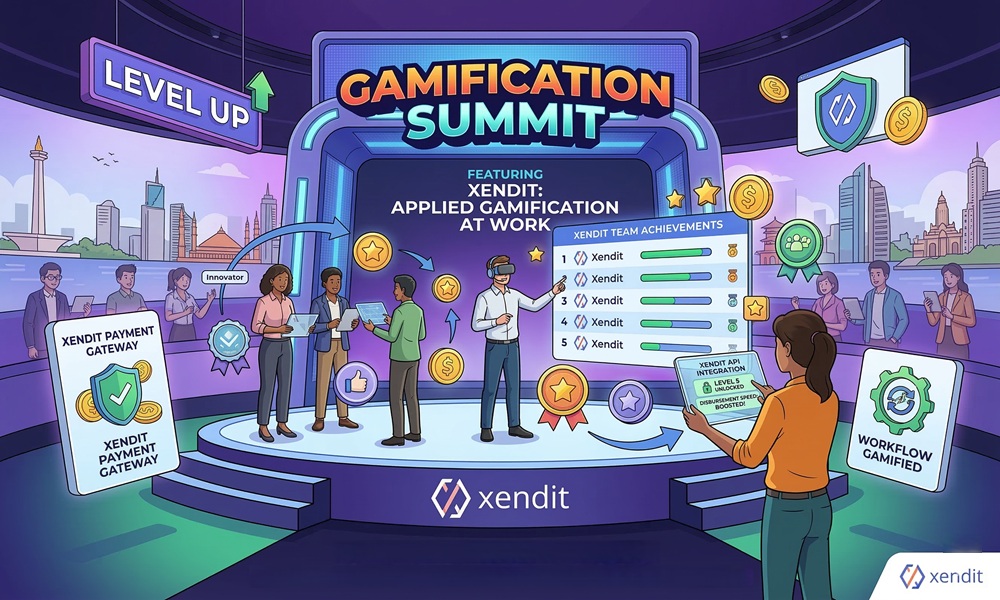
In today’s hyper-competitive digital economy, engagement is currency. Whether you are trying to retain a high-performing employee or keep a fintech user coming back to your payment platform, the challenge is the same: how do you make people want to participate? The answer, increasingly, is gamification — and no one is demonstrating this more compellingly than the collaboration between GamificationSummit and Xendit.
The phrase “GamificationSummit Work Xendit” has become a touchpoint for an entire movement that blends behavioral psychology, game design, and financial technology to transform how businesses engage with their teams and customers. This article breaks down exactly what this means, why it matters, and what actionable lessons any business can take away.
What Is GamificationSummit Work Xendit? Understanding the Core Concept
Before diving into strategy and results, it is essential to understand what “GamificationSummit Work Xendit” actually refers to. It is the convergence of three interconnected elements:
- GamificationSummit: A global platform and event series that brings together industry leaders, developers, HR innovators, and behavioral scientists to share cutting-edge strategies on using game mechanics in non-gaming environments — from the workplace to digital commerce.
- Xendit: One of Southeast Asia’s fastest-growing fintech companies, specializing in digital payment infrastructure, automation, and financial solutions for businesses of all sizes, from startups to enterprise.
- Work: The practical application layer — how these concepts are being deployed inside real companies and real products to drive measurable outcomes in productivity, engagement, and revenue.
Together, GamificationSummit and Xendit represent a powerful model where game mechanics meet real-world financial rewards. When a user earns points on a platform and instantly receives cashback through Xendit’s payment infrastructure, the loop from motivation to tangible reward becomes seamless and powerful.
The Gamification Industry: Size, Growth & Why It Matters Now
Gamification is no longer a niche concept. The numbers make a compelling case:
| Metric | Statistic | Source / Context |
| Global Gamification Market (2024) | $19.2 Billion | Statista Report 2024 |
| Projected Market Size (2027) | $48 Billion | Industry Forecast |
| Engagement Boost (Gamification + Real Rewards) | Up to 47% Higher | Digital Engagement Report 2024 |
| User Engagement Increase (Gamified Platforms) | 50%+ | GamificationSummit Work Xendit Studies |
| Customer Retention Improvement | 30%+ | Industry Research |
| Xendit Sales Increase (Sales Team – 3 months) | 20% | Xendit Internal Case Study |
| Xendit Customer Service Response Time Reduction | 30% | Xendit Internal Case Study |
| Xendit Employee Productivity Improvement | 32% | GamificationSummit 2025 Presentation |
| Xendit User Retention Rate Increase | 25% | Xendit Platform Data |
These figures demonstrate that businesses investing in gamification today are positioning themselves ahead of a massive structural shift in how digital engagement operates. With Southeast Asia’s digital economy among the fastest growing in the world, Xendit’s early and aggressive embrace of gamification puts it in a strong competitive position.
How Xendit Applies Gamification in the Workplace
Xendit’s approach to gamification is not limited to customer-facing features. The company has baked game mechanics into its internal culture with measurable results across multiple departments.
1. Points-Based Task Challenges
Xendit embeds task-based challenges and reward systems directly into daily work routines. Employees earn points tied to specific job functions — from completing merchant onboarding workflows to resolving customer issues within SLA windows. This creates a transparent, motivating feedback loop that aligns effort with recognition.
2. Leaderboards for Healthy Competition
Performance leaderboards are displayed internally, creating real-time visibility into individual and team achievements. Rather than fostering unhealthy rivalry, Xendit pairs leaderboard data with collaborative team goals — so competition and cooperation reinforce each other rather than pulling in opposite directions.
3. Achievement Badges and Milestone Recognition
When an employee reaches a significant milestone — whether hitting a quarterly sales target, completing a certification, or mentoring a new team member — they receive digital badges that are visible across the platform. The “Top Achiever” and “Champion Team of the Month” designations are not cosmetic additions; they are tied to emotional recognition that deepens employees’ connection to the company’s mission.
4. Real-Time Feedback Dashboards
Perhaps the most powerful element is Xendit’s use of performance dashboards styled like game progress meters. Employees can see exactly where they stand relative to their goals at any given moment — not in a quarterly review, but in real time. This visual system makes improvement transparent, immediate, and intrinsically motivating.
Real Results: Xendit’s Gamification Impact by the Numbers
The proof of any strategy is in its measurable outcomes. Xendit has shared compelling data points from its gamification implementations:
- The sales team recorded a 20% increase in sales within just three months of introducing gamified targets.
- The customer service department achieved a 30% reduction in response times after deploying a gamified training module.
- Overall employee productivity improved by 32%, as reported during Xendit’s presentation at GamificationSummit 2025.
- User retention on Xendit’s platform increased by 25% following the integration of gamified elements into the payment interface.
- Customer engagement for businesses using Xendit’s gamified reward API saw up to 47% higher engagement compared to non-gamified implementations.
These results are not isolated incidents. They reflect a systematic, data-driven approach to motivation design — one that the GamificationSummit community has studied, validated, and replicated across industries.
What Happens at the Xendit Work GamificationSummit?
The GamificationSummit focused on Xendit work culture is more than a conference — it is a structured learning and collaboration environment designed to generate actionable outcomes. Here is what participants typically experience:
Keynote Presentations
Industry leaders and Xendit executives take the stage to share case studies, data, and vision. At the GamificationSummit 2025, Xendit’s CEO stated plainly that gamification is “an essential part of the work environment” — not a future aspiration, but a present operational reality.
Interactive Workshops
Attendees do not just listen — they design. Hands-on sessions allow participants to build their own gamification strategies for their specific business context. These workshops often result in participants leaving with a working prototype or implementation roadmap.
Networking and Partnership Development
The summit creates a curated environment for startups, corporates, and developers to connect with Xendit’s partner ecosystem. Many integrations that power gamified payment experiences in Southeast Asia trace their origins to relationships formed at this event.
Panel Discussions on Emerging Trends
Sessions regularly cover topics such as personalized gamification experiences driven by AI, cross-industry adoption in healthcare and education, adaptive challenges that respond to individual user behavior, and the next phase of reward systems that go beyond badges to deliver real financial incentives.
Gamification in Fintech: Xendit’s Customer-Facing Innovations
Beyond internal operations, Xendit has integrated gamification directly into its payment and financial products in ways that benefit businesses building on its infrastructure:
- E-commerce platforms can offer spin-the-wheel discounts or milestone rewards, with instant cashback credited to customer wallets via Xendit’s real-time payment processing.
- EdTech companies design gamified quiz formats where top performers instantly receive scholarships or gift cards disbursed through Xendit.
- Loyalty apps allow users to earn points and instantly redeem prizes or cash out through Xendit’s payment channels — closing the gap between virtual reward and real value.
- Onboarding flows for new merchants are gamified to reduce drop-off, with progress meters and completion rewards that guide users through typically tedious verification steps.
According to research shared at the summit, businesses that pair gamification with real-world financial rewards see up to 47% higher engagement than those using gamification alone. This is precisely the gap Xendit fills: making the reward tangible, instant, and trustworthy.
Challenges and How to Navigate Them
No strategy is without its complexities. Organizations looking to adopt the GamificationSummit Xendit work model should be aware of common pitfalls and how to address them:
| Challenge | Description | Recommended Solution |
| Over-Gamification Risk | Excessive game elements cause user fatigue and disengagement | Balance rewards with genuine value; avoid superficial mechanics |
| Misaligned Goals | Game elements don’t match actual business objectives | Define clear KPIs before designing any gamification system |
| Technical Integration | Linking gamification platforms with payment APIs needs expertise | Partner with experienced fintech developers; use Xendit’s APIs |
| Cost Management | Scaling reward campaigns can strain budgets quickly | Start small; use data analytics to identify highest-ROI touchpoints |
| Privacy Concerns | Tracking employee/user behavior raises data ethics questions | Be transparent; follow GDPR/local data protection regulations |
The GamificationSummit community is explicit on this point: gamification works best when it is grounded in a genuine understanding of what motivates people, not just what looks impressive in a product demo.
How to Implement the GamificationSummit Xendit Work Model in Your Business
Whether you run a fintech startup, an e-commerce brand, or a corporate HR department, the following implementation framework — drawn from insights shared at the summit — provides a practical starting point:
Step 1: Define Clear Goals First
Identify what behavior you want to encourage: higher transaction volume, faster employee onboarding, more product reviews, or better training completion rates. Every game mechanic should trace back to a specific, measurable objective.
Step 2: Map Mechanics to Motivation
Understand your audience. Employees and customers have different motivational profiles. Use a mix of intrinsic motivators (progress, mastery, purpose) and extrinsic rewards (points, badges, cash-back). Over-relying on extrinsic rewards without intrinsic meaning creates engagement that evaporates when rewards stop.
Step 3: Integrate Real Rewards via Payment Infrastructure
The biggest differentiator in the Xendit model is the ability to connect digital engagement to real financial value. Use payment APIs to ensure that when a user earns a reward, they can actually access it — instantly, seamlessly, and reliably.
Step 4: Measure, Iterate, and Personalize
Set KPIs before launch — engagement rates, completion rates, retention metrics, revenue lift. Use analytics dashboards to monitor progress in real time. Gather employee and customer feedback regularly. The goal is an evolving system that responds to its users, not a static initiative.
Step 5: Stay Consistent and Communicate
Gamification loses its power when it feels abandoned. Keep participants informed of changes, celebrate milestones publicly, and continuously introduce new challenges that prevent stagnation.
The Future of GamificationSummit Work Xendit
Looking ahead, the intersection of gamification and fintech is entering an even more sophisticated phase. The next wave — as discussed by innovators at the summit — will involve AI-driven personalization that adapts challenges and rewards to individual user behavior in real time, cross-industry adoption accelerating in healthcare, education, and government services, integration with blockchain-based reward tokens for transparent and transferable incentives, and workplace gamification evolving into fully immersive hybrid work experience platforms.
Xendit has signaled its intention to continue expanding its gamification partnerships across Southeast Asia, deepening its role not just as a payment processor but as an infrastructure layer for the entire engagement economy. For businesses across the region, this represents a significant opportunity to build loyalty, productivity, and revenue on a foundation that is both psychologically sophisticated and financially tangible.
Final Takeaway
The GamificationSummit Work Xendit framework is more than a corporate case study — it is a blueprint for how modern organizations can align human motivation with business outcomes. By making progress visible, rewards real, and work genuinely engaging, companies are discovering that the line between productivity and play does not have to exist.
Whether you are a founder looking to improve user retention, an HR leader trying to reduce turnover, or a developer building the next great fintech product, the lessons from this collaboration are clear: gamification works best when the rewards are real, the goals are aligned, and the systems are built on infrastructure you can trust.
That is precisely what GamificationSummit and Xendit, together, are delivering to Southeast Asia and beyond.
