

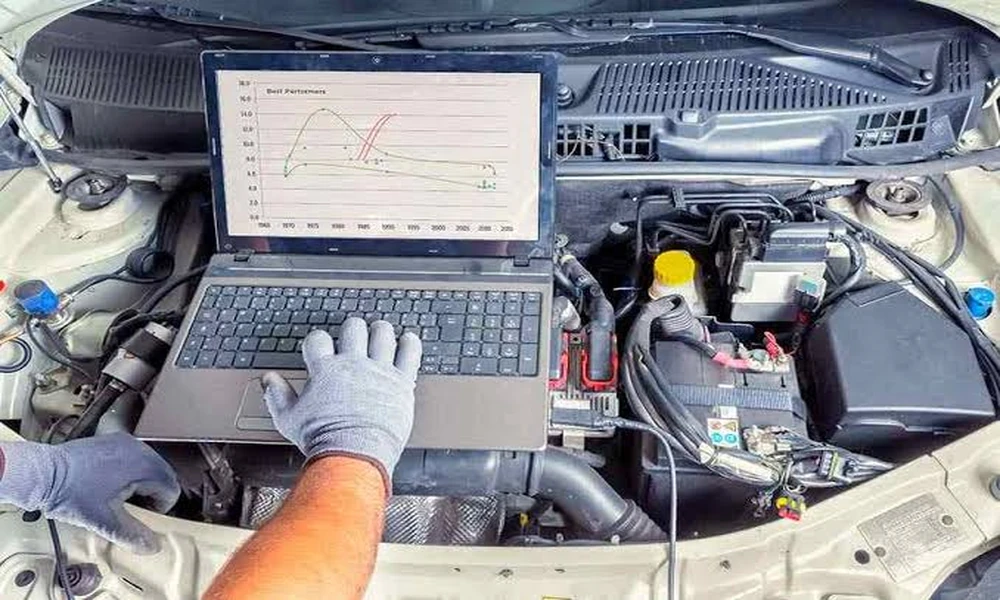
A second-hand engine control unit off another car looks like a bargain until it’s plugged in and nothing happens. The engine turns over, maybe, but won’t start, or the dashboard fills with warnings. That’s because the unit still thinks it belongs to its old car. ECU Cloning fixes this by copying the identity and configuration data from the original unit onto the replacement, so the car accepts it as its own.
What Data Comes Across?
Quite a lot, and every piece matters. The VIN is the obvious one. Immobiliser coding is another, since it’s what lets the unit and the key agree the driver is allowed to start the engine. Without it, nothing happens.
Injector coding comes across too. Each injector on many diesel engines has its own correction values, and the unit needs those to fuel the engine evenly. Calibration data, the maps that control fuelling, timing and boost, is copied as well, along with the contents of the unit’s memory chips (often called EEPROM and flash) and any security synchronisation data the car uses to check its modules trust each other.
Once all of that has moved over, the replacement should behave exactly like the original did before it failed.
Matching the Hardware Matters
Copying data only works if the replacement is compatible. The safest bet is a unit with the same hardware part number as the original. Similar-looking units from the same model range can differ inside, and a mismatch can mean the copy won’t take or the engine won’t run properly afterwards.
Most units have the part number printed on a label on the casing. It’s worth checking before buying a replacement, not after.
When Is This the Right Fix?
ECU Cloning suits situations where the original unit has a hardware fault but its stored data can still be read. Common examples include a no-start that’s been traced to the unit, internal fault codes, communication dropouts or damage that’s affected the circuitry but not the memory.
It’s often quicker and cheaper than a dealer-supplied new unit, which usually needs online coding with the manufacturer’s own equipment and sometimes new keys as well.
What It Doesn’t Do
Copying won’t fix a fault that lives somewhere else. If the real problem is wiring, a sensor or the immobiliser module itself, a cloned unit will run into the same issue. A proper diagnosis before swapping anything saves time and money.
It also isn’t a tuning service. The goal is a replacement that behaves like the original, with nothing added and nothing taken away.
The Data Is the Part
The physical box is easy to find. What makes it work in a particular car is the information inside. Getting that information across accurately is the whole job, and it’s why a matched, cloned unit can go back into the car and start first time.
